Guides / For Shops
Titanium First Lot Checklist: Paperwork, Packing and Passivation Before It Ships
A first lot of titanium parts can fail on what is missing around the parts as easily as on the parts, so check four things before the crate is closed: the paperwork pack, the surface and cleaning route, the packing and the shipping documents. This post is a pre-ship checklist for the shop that cuts the first lot for a new buyer abroad. It covers what falls outside the cutting, so it pairs with our guide to heat lot segregation, which covers keeping the bar and the parts tied together.
This is a shop-side post. It does not set prices or terms: those are between you and the buyer, and the examples below are published terms of other companies, shown as wording and not as rules.
Why the first lot gets the closest look
The buyer has seen your quote and perhaps a sample. The first lot is the first time the whole route arrives together: the parts, the certificates, the reports, the packing and the invoice. If the order requires first article acceptance, the buyer also has a formal step before production parts can follow. Nikon AM Synergy’s published supplier terms say a supplier may not submit parts from the production run before the buyer accepts the first article, when the order requires that acceptance. Treat the first lot as an audit of your route, not as a delivery.
The checklist
| Area | Item to check before shipping |
|---|---|
| Paperwork | Mill certificate of the type the order names, matched to the heat number on the parts |
| Paperwork | First article report with a ballooned drawing, if the order asks for it |
| Paperwork | Signed certificate of conformance for this shipment |
| Paperwork | Process certificates for anodizing, heat treatment or NDT, with specification revisions |
| Surface | The treatment the drawing names was run, and the record says which |
| Surface | Tools, media and cutting fluid are clean: no iron carry-over, non-chlorinated fluid |
| Packing | Part number, revision and lot number on the smallest unit packaged |
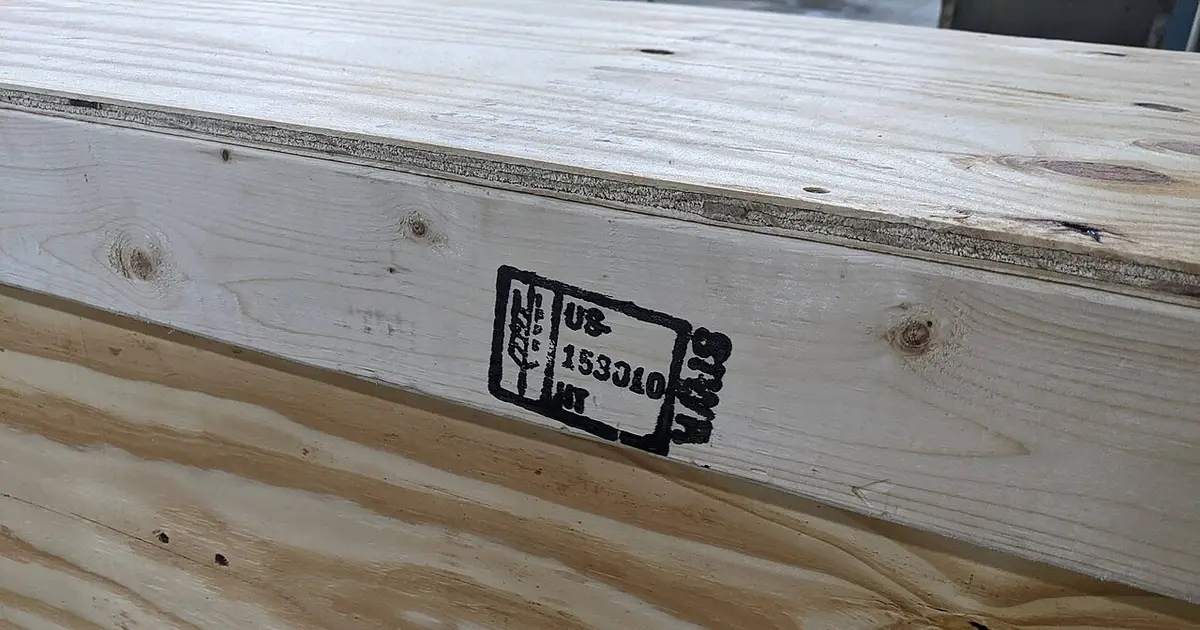
| Packing | Wood crate or pallet carries the heat treatment mark, if it is wood |
| Shipping | Packing list and commercial invoice agree with the parts and the order |
| Shipping | Incoterms rule and place match the quote |
Paperwork pack
Mill certificate. Check the EN 10204 type against the order. Type 2.2 reports non-specific inspection results validated by the manufacturer. Type 3.1 reports specific results validated by the manufacturer’s authorised inspection representative, independent of production. Type 3.2 adds validation by the buyer’s representative or an official inspector, as Wermac’s summary of the standard puts it. Check that the heat number on the certificate is the one marked on the parts and that the specification revision is the one the order names. Our guide to mill certificates shows the fields.
First article report. GKN Aerospace’s guidance on AS9102 reports lists what reviewers look for: copies of the original mill certifications with the specification revision, certification numbers for material and special processes, a ballooned print with the characteristic numbers and actual measured values. It says CMM data alone is not acceptable for a positional tolerance because the report must show the actual positional value. It also lists what brings a new first article later, among them a change of source, process, tooling, material or NC program. Keep the program and the route of the first lot frozen until the buyer has signed, so your first article stays valid.
Certificate of conformance. Nikon’s terms require a signed certificate with each shipment stating that the material, process and services are those the order specifies, supported by test records that are open to audit. Make one per shipment and put the order number and revision on it.
Process certificates. For each outside process, collect the processor’s certificate with the specification and revision it ran to. GKN’s guidance asks for process, heat treatment and NDT certifications that note the specification revision and, for coatings such as anodize, actual thickness verification. Our guide to titanium anodizing shows what the process certificate should carry.
Surface, cleaning and what “passivate” means
A drawing note that says only “passivate” leaves most questions open. For parts governed by ASTM F86, which covers surface preparation and marking of metallic surgical implants, the practice says iron particles, ceramic media and other foreign particles can smear over or embed in the surface during forming, machining, tumbling, media blasting and marking, and that they should be removed. It describes chemical and electrochemical treatments that remove surface contaminants and restore or promote a passive surface such as a metal oxide film, and says some are called passivation. It also says marking can come before or after treatment, and that a mark made after treatment needs to be evaluated for further treatment. F86 is a medical practice. We hold no medical registration and nothing here claims the work is medical. It is a useful description of what a clean titanium surface involves when a customer cites it.
What this means for the shop:
- Ask what the drawing means. If the note names no process or specification, ask the buyer before you run anything. Our page on ASTM F86 lists the questions.
- Control acid steps. ATI’s data sheet for commercially pure titanium warns that it can suffer hydrogen contamination during improper pickling, and notes the practice of machining with large amounts of non-chlorinated cutting fluid. A bath that is not controlled is a risk to the part, not only to the finish. See pickling and chemical milling.
- Keep a record. Write down which treatment ran on which lot and attach it to the pack.
- Keep contact clean. Tools, tumbling media and marking tools that touch the part are the routes F86 names, so the first lot is the lot to show your handling rules.
Need a quote for this part? Get a titanium quote
Packing
Nikon’s terms ask for packaging that protects against cross contamination, product mix-up, foreign objects, corrosion, oxidation and environmental conditions, and set the minimum identification at part number, revision letter and lot number on the smallest unit packaged. Put those on every bag or tray.
If the crate or pallet is wood, it falls under ISPM 15. The standard requires debarked wood that is heat treated or fumigated and marked. Heat treatment means the wood core reaches at least 56 degrees Celsius for at least 30 minutes, and the mark carries the IPPC symbol, the country code, the treatment provider’s number and the treatment code, such as HT for heat treated, according to the Wikipedia summary of the standard. Plywood and wood 6 mm or thinner are exempt. Importing countries add rules of their own, so ask the buyer to confirm the destination requirement before the crate is built. If you buy crates, check the mark on each one.
Shipping documents
The packing list and the commercial invoice have to agree with the parts and the order. For a US import, 19 CFR 141.86 asks for the country of origin, a description with grade or quality, quantities, unit price and currency, each charge itemized and a packing list showing what is in each package. It also asks for assists, such as tools or engineering work supplied by the buyer and not included in the price. A buyer’s broker elsewhere will want much the same, so build one invoice template with those fields.
State the Incoterms rule and the named place on the invoice the way the quote did. The International Chamber of Commerce describes Incoterms 2020 as eleven rules that clarify the tasks, costs and risks of delivering goods from seller to buyer. If the order is controlled, the export status goes on the documents too; see export controls on titanium parts.
Send the pack before the crate
Email a draft of the pack to the buyer before the parts leave. A missing page or a wrong revision is cheap to fix while the parts are on your bench and expensive once they are at the buyer’s receiving dock. Claim windows can be short: one manufacturer’s published quote terms require a written nonconformance claim within five business days of delivery, so a gap found before shipping costs less than one found after. Our post on who pays when a titanium part is rejected shows how those disputes run.
Where to take this next
A first lot that arrives complete sets the tone for the repeat orders that follow. Keep the pack template, the crate specification and the invoice template as one folder per buyer, and update it once per lot.
If you cut titanium and want enquiries from buyers abroad who send drawings and quantities, read the page for shops and talk to us about whether it fits your shop.
Sources
- GKN Aerospace, AS9102 first article inspection report common mistakes, revision A, March 2022
- Nikon AM Synergy, supplier terms and conditions F020 Rev F (first article, certificate of conformance, packaging, identification)
- Wermac, EN 10204 certificate types (summary of the standard)
- ASTM F86-21(2026), surface preparation and marking of metallic surgical implants (scope and significance)
- ATI, CP Grade 1 to 4 technical data sheet (machinability and special precautions)
- Wikipedia, ISPM 15 (summary of the wood packaging standard)
- 19 CFR 141.86, contents of invoices (Legal Information Institute)
- International Chamber of Commerce, Incoterms 2020 rules
- Avalon, quote terms, revision 4/15/2024 (claim periods; one manufacturer’s published terms)
Frequently asked questions
What documents should ship with a first lot of titanium parts?
The mill certificate tied to the heat number, the first article inspection report with a ballooned drawing if the order asks for it, a signed certificate of conformance, process certificates for anodizing or heat treatment, a packing list and the commercial invoice. Send a draft of the pack to the buyer before the crate is closed.
Why is the first lot of titanium parts checked harder?
It is the first time the buyer sees your route, your paperwork and your packing at quantity. First article rules also give the buyer a formal step: a published buyer's terms bar production parts from shipping before first article acceptance when the order requires it. Treat the first lot as an audit of the whole route.
What does passivate mean on a titanium drawing?
On its own, little. ASTM F86 describes chemical and electrochemical treatments that remove surface contaminants and restore or promote a passive surface, and says some are called passivation. It covers surgical implants. The drawing or the customer's process should name the treatment, the specification and the acceptance. If it does not, ask before you run it.
Do export crates for titanium parts need a wood treatment mark?
Wooden crates and pallets in international trade fall under ISPM 15: debarked wood, heat treated or fumigated and marked. Heat treatment means a core temperature of at least 56 degrees Celsius for at least 30 minutes. Plywood and wood 6 mm or thinner are exempt. Importing countries add rules, so confirm the destination requirement.
Need a quote for this part?
Send the drawing. We send one itemised quote for the finished parts and reply within 24 business hours.
Get a titanium quote