Guides / For Shops
Titanium Heat Lot Segregation: Keeping Every Part Tied to Its Bar
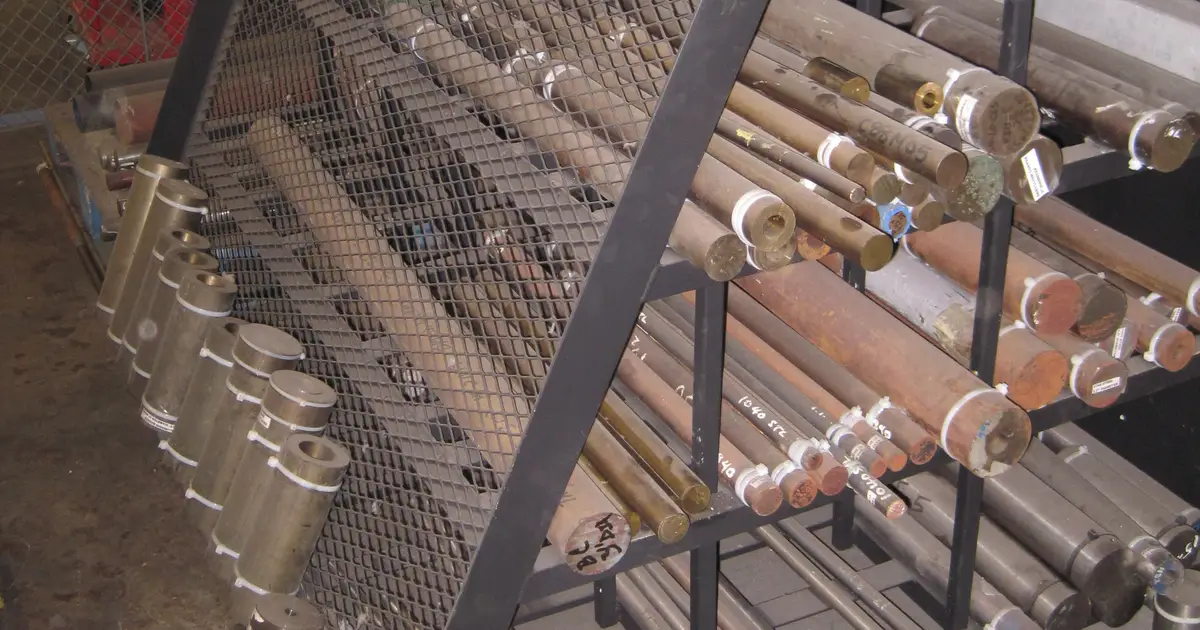
Heat lot traceability in a titanium shop is a chain of small controls, and it breaks at the same few places every time: the saw that removes the bar’s marking, the offcut bin, the outside processor and the shipping table. A mill certificate only proves something about the bar it was issued for. The shop has to prove that the part in the box came from that bar. Here is a stage by stage control that works with the public standards we could open, with the limits of each stated.
What the heat number actually promises
A mill test report certifies a material’s chemical and physical properties and states that the product meets the standard it was ordered to, as the Wikipedia entry on the report describes it. It records the certificate type, the grade and the test results so the buyer can compare the material with the standard. A European certificate is typically produced to EN 10204. Type 3.1 is issued by the manufacturer, who declares compliance and supplies test results, and type 3.2 is prepared with an independent inspection representative from the manufacturer and either the buyer’s representative or an official inspector. Our mill certificates guide explains which type an RFQ needs.
The certificate says what the bar is. The shop’s job is the second half: proving that each part came from that bar. A shop that cannot do that has a certificate and no traceability.
The chain, stage by stage
| Stage | Control | Record | Where it usually fails |
|---|---|---|---|
| Receiving | Match bar end marks to the certificate: grade, size, specification, heat number | Receiving log with PO and heat number | Certificate filed, bars never compared to it |
| Stores | One rack position per heat, grade labelled on the rack and on every bar | Location list | Two heats in one slot, short bar returned to the wrong rack |
| Issue to job | One heat per job where possible, remnant weighed or measured on return | Job traveler with heat number | Blank cut from “whatever is nearest” |
| Sawing | Mark each blank before the cut that removes the original mark | Witnessed transfer mark | The marked end is the end that gets cut off |
| Machining | Traveler or bagged parts stay with the batch | Operation sign-offs | Parts from two bars share one tray |
| Outside process | Parts leave in bags marked with traveler copy, return is checked | Outgoing and incoming log | Anodizer or heat treater regroups parts by size |
| Offcuts and chips | Offcuts carry the heat number or go to scrap, chips go to a titanium container | Scrap log | Offcut with no mark ends up in the next job |
| Shipping | Certificate of conformity lists part number, quantity and heat number | Packing check against traveler | Two heats in one box, one heat on the paperwork |
The control column is practice, not a standard. Where a customer specification adds to it, the customer specification wins.
Stores: segregate by grade first, then by heat
Segregation by grade comes before heat because the wrong grade is the costly mistake. ASTM lists titanium bar and billet grades 1 through 38, with Grade 5 as Ti-6Al-4V and Grade 23 as its extra-low-interstitial version. The standard also says H-grade material may always be certified to its corresponding numeric grade, so a bar’s grade name on the end mark is not always the whole story. Put the grade on the rack, on the bar and on the bar’s tag, and keep Grade 5 and Grade 23 on separate racks. They look the same and cost differently. See the Grade 23 guide.
A rack with one slot per heat is simple. Mark the slot, not just the bar, because bar ends get cut off. When a short remnant comes back from the saw, it goes back to the slot of its heat or it goes to scrap, never to a general offcut bin.
Receiving: check the bar against the paper
On receipt, compare each bar’s end mark with the certificate before anything is cut. Record the heat number against the purchase order. If the bar mark and the certificate disagree, quarantine the bar and call the supplier. Do not fix it with a pen.
Handheld XRF is a useful screen here and a weak proof. Evident Scientific’s handheld alloy page says XRF measures only elements heavier than sodium, measures about 10 microns deep so surface condition matters, and is not a full metallurgical certification. Light elements such as aluminium need a longer measurement, and direct light-element testing adds 10 to 60 seconds. Oxygen, carbon and nitrogen are lighter than sodium, and the interstitial limits are what separate Grade 5 from Grade 23. So XRF can catch a Grade 2 bar in a Grade 5 slot, but it cannot sign off an ELI claim. For that you need the certificate and, if the buyer asks, a lab test.
Sawing and transfer marking
The saw is where traceability dies. The cut removes the end with the heat number, and the blank in your hand has no mark. A shop with a working process marks the blank before or at the cut, and a second person witnesses it when the quality plan says so.
For a blank that will be machined further, use a mark that survives the next operations: a tag tied to the bar, a bag with a traveler or a mark on a surface that will not be removed. For the finished part, the marking method depends on the part. A direct part marking summary on Wikipedia lists dot peen, laser, electro-chemical etching and engraving among the methods. It says non-intrusive methods are recommended for safety critical parts and, for intrusive marks, that depth should not exceed one tenth of the part thickness. It also cites NASA-STD-6002D for Data Matrix symbols on aerospace parts. On a small or fatigue-loaded part, mark the container and the paperwork instead, and say so in the quote.
Need a quote for this part? Get a titanium quote
Machining, outside processes and chips
During machining, the traveler travels with the parts. Mixed trays are the usual failure, so give each heat its own tray or bag and a colour, and stop at a heat change when a job uses blanks from two bars.
Outside processes are where identity leaks. Anodizing, pickling and heat treatment all regroup parts, and a processor may not know what a heat number is. Send a bag per heat, a copy of the traveler and a rule that parts return in the same bag. Check the count when they come back. Our guides to anodizing and pickling and chemical milling cover two processes that often leave the shop.
Chips need a different rule. Most shops do not track chips by heat, but they keep titanium chips out of steel and aluminium bins and, where they run both, Grade 5 apart from Grade 23. Our scrap value guide explains why mixed grades cannot be recycled cleanly, and a shop that mixes its chips is likely at risk of mixing its stock. Fines need their own handling under the chip fire guide.
Shipping and what to keep
The certificate of conformity that ships with the parts should name the part number, the quantity and the heat number, and reference the original mill certificate. Check the packing against the traveler before the box is sealed. A box with parts from two heats is allowed only if the paperwork lists both with quantities.
Keep the mill certificate, the receiving log, the traveler and the shipping check together for each job. How long you keep them is set by the buyer’s specification, not by us. If the purchase order says nothing, ask. ASTM B348 has its own identification and certification clauses for bar, and the edition on your purchase order governs. We did not reproduce those clauses here, so read the standard you were sold.
When something goes wrong
If you find two heats mixed, stop, quarantine the lot, and tell the buyer. Do not re-mark parts by guess. If the heats have the same grade and both certificates meet the order, the buyer may accept a split lot with both heat numbers on the paperwork. If you cannot tell which heat is which, scrap is often the only clean answer. Write the rule into the quality plan before it happens, so the person at the bench is not deciding it.
Why buyers ask
Buyers ask about heat numbers because a part with no traceable origin can be rejected, and because a bad bar surfaces months later. Ask a shop how it transfers heat numbers when the original marking is machined away. The answer separates shops that have done this from shops that only file certificates. Our guide to choosing a titanium supplier lists this among the questions to ask.
If your shop already cuts titanium and wants work requests that fit its machines, join as a partner shop. There is no fee to join, you decide what to quote, and we make no promise of work.
Sources
- Wikipedia, Mill test report (certificate contents, EN 10204 types 3.1 and 3.2)
- Wikipedia, Direct part marking (marking methods, non-intrusive marking, depth limit, NASA-STD-6002D)
- ASTM, B348 titanium and titanium alloy bars and billets (scope, grades 1 to 38, H-grade note)
- Evident Scientific, handheld XRF for alloy positive material identification (limits and test times)
Frequently asked questions
What is a heat lot in titanium bar?
A heat lot is the material from one melt, tied to a heat number on the mill certificate. The mill test report records the grade and the chemical and physical test results so a buyer can compare the material with the standard. Your job is to keep that number attached to every piece cut from the bar until the part ships.
Can a handheld XRF analyzer prove a titanium bar is the right grade?
Only partly. An Evident Scientific page says XRF measures elements heavier than sodium to about 10 microns deep and is not a full metallurgical certification. Oxygen, carbon and nitrogen are lighter, so it cannot confirm the interstitial limits that separate Grade 5 from Grade 23. Use it as a screen at receiving, not as a replacement for the certificate.
How should you mark a heat number on a finished titanium part?
Follow the drawing or purchase order first. A direct part marking summary says non-intrusive methods are recommended for safety critical parts and that an intrusive mark should not exceed one tenth of the part thickness. Where a mark would harm the part, use a bag, tag or container with a traveler that carries the heat number.
Do titanium chips need to be separated by heat lot?
Not by heat in most shops, but by alloy, and by grade where you run Grade 5 and Grade 23. Keep titanium chips apart from steel and aluminium chips. Mixed grades cannot be recycled cleanly, and titanium fines have their own fire rules, so use labelled, closed containers and empty them on a schedule in your safety plan.
Need a quote for this part?
Send the drawing. We send one itemised quote for the finished parts and reply within 24 business hours.
Get a titanium quote