Guides / Grades
High Temperature Titanium Alloys: Ti-6242, Ti-6246 and Where Ti-6Al-4V Stops
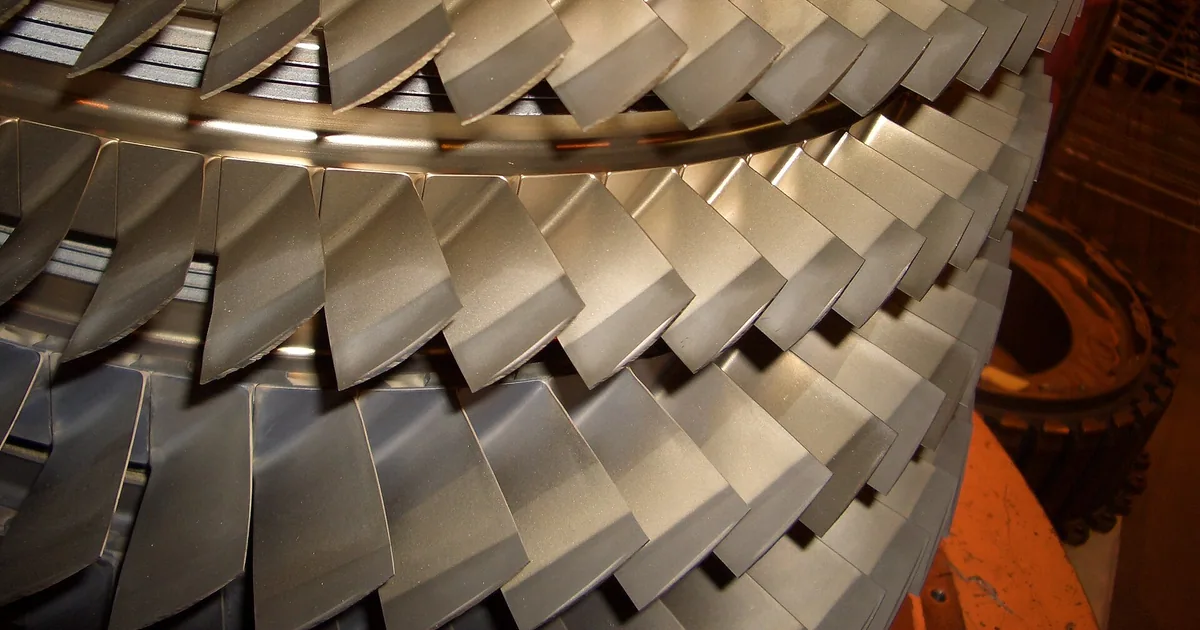
Ti-6Al-4V runs out of temperature before most buyers expect it to. Published limits put it at about 315 to 400 °C, and above that the drawing moves to a near-alpha alloy such as Ti-6242, which an ASM Alloy Digest abstract describes as for long-term use to 538 °C, or to a stronger relative such as Ti-6246. These alloys are called out by SAE AMS numbers, not by an ASTM grade, they are heat treated to the specification and the stock pool is smaller. This post is part of our guide to titanium grade selection. It covers the grades and the paper, not part design. Figures are typical and sourced; the AMS texts are paywalled and we did not read them.
Where Ti-6Al-4V stops
| Source | Alloy | Published temperature | What it says |
|---|---|---|---|
| Leyens, DLR, ICAS 2004 | Ti-6Al-4V | about 315 °C | Maximum temperature limit for the alloy in fan blades and disks |
| Rolled Alloys datasheet | Ti-6Al-4V | through 750 °F (about 400 °C) | Annealed service; high strength to 600 °F (about 316 °C) |
| ASM Alloy Digest, TIMETAL 6-2-4-2 | Ti-6242 | 538 °C (1000 °F) | Long-term use |
| Leyens, DLR, ICAS 2004 | near-alpha alloys | about 540 °C | Set by oxidation and alpha case, not by strength |
| Smiths Metal datasheet | Ti-6246 | 450 °C | Strength retained |
The sources do not agree on Ti-6Al-4V because they answer different questions. Leyens gives an engine design limit. The distributor datasheet gives where the annealed alloy is typically used. For your part, the designer’s allowable stress at your temperature decides, and no buyer should read these figures as a design value.
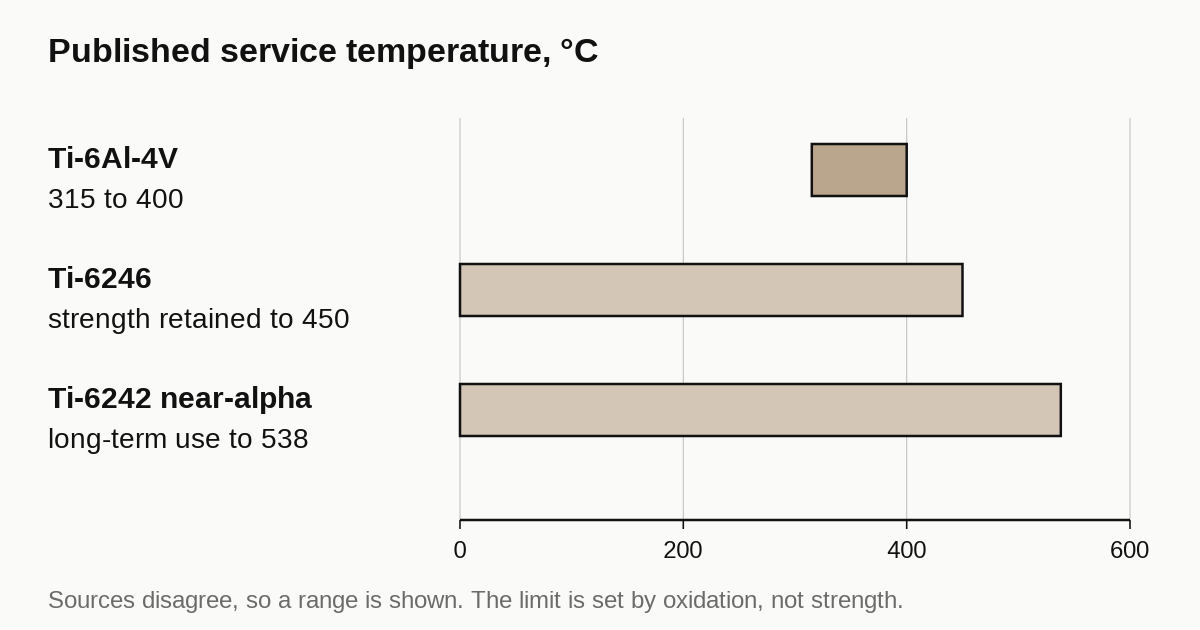
Leyens explains why the ceiling sits where it does. In long-term hot service titanium forms alpha case, a brittle oxygen-rich zone just under the surface that sharply reduces ductility and fatigue strength. So the limit is oxidation, and that is why alpha case control comes up again in the sections below.
What the alloys are
Ti-6242 is nominally 6 percent aluminium, 2 tin, 4 zirconium and 2 molybdenum. The version in the AMS titles carries about 0.08 percent silicon, which is the Si in the AMS title. Titanium Industries lists the composition limits as aluminium 5.5 to 6.5, zirconium 3.6 to 4.4, tin 1.8 to 2.2, molybdenum 1.8 to 2.2 and silicon 0.06 to 0.10 percent, with oxygen at 0.15 percent maximum. It labels the data for reference only, not for design. Its description says the alloy can be heat treated to higher strengths in larger sections than Ti-6Al-4V and that forged material gives a good balance of low cycle fatigue and crack growth resistance.
Ti-6246 is the same base with 6 percent molybdenum. Smiths Metal describes it as a stronger derivative of Ti-6242, heat treatable and deep hardenable, with weldability limited. Sources label these alloys differently: one distributor calls Ti-6242 alpha-beta, while engine literature groups the elevated temperature compressor alloys as near-alpha. For a buyer the label matters less than the specification number.
| Item | Ti-6Al-4V | Ti-6242 | Ti-6246 |
|---|---|---|---|
| Nominal composition | 6Al-4V | 6Al-2Sn-4Zr-2Mo (0.08Si) | 6Al-2Sn-4Zr-6Mo |
| Bar minimum tensile and yield | 895 and 828 MPa (ASTM B348 annealed) | We did not read a public minimum | 1,172 and 1,103 MPa (Smiths datasheet, annealed bar) |
| Published temperature | about 315 to 400 °C | 538 °C (long-term use) | 450 °C (strength retained) |
| Weldability | Welded with matching or ELI filler wire | Not stated in the sources we read | Limited |
| Specification route | ASTM B348, AMS 4928, AMS 4965 | AMS 4975, AMS 4976 | AMS 4981 |
The AMS numbers on the drawing
SAE International issues the AMS aerospace material specifications. The table lists what the SAE and DIN Media listings we opened say. Revisions change, so read the revision letter on your drawing.
| Specification | Alloy | Forms and size (as listed) | Condition | Revision seen as of October 2026 |
|---|---|---|---|---|
| AMS 4975 | Ti-6Al-2Sn-4Zr-2Mo-0.08Si | Bars, wire, flash welded rings 3.00 in (76.2 mm) and under; any size for ring stock | Solution and precipitation heat treated | R (2025-09-12) is listed as newer than P (2021-12-01) |
| AMS 4976 | Same | Forgings 3.000 in (76.20 mm) nominal diameter and under; forging stock any size | Solution and precipitation heat treated | N (2025-09-12), current in the DIN Media listing |
| AMS 4981 | Ti-6Al-2Sn-4Zr-6Mo | Bars, wire, forgings, forging stock | Solution and precipitation heat treated | J (2022-08-17) latest listed |
Smiths Metal lists round bar availability for Ti-6246. We did not find the texts’ minimum properties or testing clauses in any source we could open, so this post gives none.
How to cite it on a drawing: alloy, specification with revision letter, condition and form. For example: “Ti-6Al-2Sn-4Zr-2Mo-0.08Si per AMS 4975, revision as drawn, solution and precipitation heat treated, bar.” Do not write “Ti-6242” alone. We found no ASTM B348 grade number for Ti-6242 or Ti-6246 in the grade lists we read, so the AMS number is the route.
What it does to stock and the quote
Expect a smaller pool. Ti-6Al-4V bar is the commodity of the titanium trade, and the near-alpha alloys are specification products, often forged. We found no public stock or lead time figure for Ti-6242 or Ti-6246 bar, so ask each shop for the stock position and the mill lead time as separate lines, as our stock forms guide explains.
On the machine, we found no public head-to-head cutting speed comparison of Ti-6242 and Ti-6Al-4V. Ti-6246 at 1,172 MPa minimum tensile is about 31 percent above the Ti-6Al-4V minimum of 895 MPa, which is a reason to expect slower cutting, not data. A trial cut and a stated tool life assumption in the quote are sensible for a first order. The AMS conditions above are heat treated, so the shop must say whether it cuts before or after the treatment.
Alpha case matters for the hot-use reason above. Any step at temperature in air, for example stress relief or heat treatment, grows an oxygen-rich layer that the shop must allow for and remove. Put the allowance on the drawing.
Need a quote for this part? Get a titanium quote
When nickel takes over
Leyens notes that the hottest compressor stages use nickel-based superalloys at nearly twice the weight, because the oxidation resistance of titanium alloys is only moderate there. Our titanium versus Inconel guide compares the two. Past the 540 °C region, the question stops being which titanium grade and becomes whether titanium is the right metal at all.
Misreadings to avoid
- “Near-alpha is better at everything.” It is better hot. Below its range Ti-6Al-4V is the easier alloy to buy.
- “AMS 4975 is annealed like AMS 4928.” The AMS 4975 title says solution and precipitation heat treated.
- “One AMS number covers bar and forgings.” For Ti-6242, AMS 4975 and AMS 4976 are separate documents for bars and forgings.
- “Ti-6246 is Ti-6242 with a different name.” It has three times the molybdenum and a different specification.
- “The datasheet temperature is the allowable temperature.” It is a published figure, not your design allowable.
Export control
Parts for gas turbine engines and aircraft can be subject to export control in the country of origin. This post covers material choice only and uses civil framing. Classify the part and the drawing first, and see our export control guide. This is US-focused information, not legal advice. We do not accept RFQs for controlled defence articles, and nothing on this site claims an ITAR registration.
What to write in the spec
- Alloy, specification, revision letter, condition and form.
- Service temperature and time at temperature, so the shop can see the alpha case risk.
- Whether you or the shop supplies the material and the stock lead time you can accept.
- Certificates: the mill certificate to the named specification and the heat number.
- Any heat treatment sequence: before or after machining.
- Whether a first article or a trial cut is expected.
If you are still choosing the alloy, the guide to titanium grade selection sets the decision out from the requirement. See the specifications index for the standards we cover in more detail. Send the drawing through the RFQ form and we reply within 24 business hours with one itemised quote.
Sources
- Leyens, DLR, Advanced Materials and Coatings for Future Gas Turbine Applications, ICAS 2004 (Ti-6Al-4V and near-alpha limits, alpha case, nickel at nearly twice the weight)
- ASM Alloy Digest, TIMETAL 6-2-4-2 (abstract: long-term use to 538 °C)
- SAE AMS 4975P listing, with AMS 4975R noted as newer
- DIN Media, SAE AMS 4976N listing
- SAE AMS 4981 listing
- Titanium Industries, Ti-6Al-2Sn-4Zr-2Mo (composition limits, description; reference data only)
- Smiths Metal Centres, Ti-6Al-2Sn-4Zr-6Mo datasheet (450 °C, bar minimums, weldability)
- Rolled Alloys, 6Al-4V titanium datasheet (service temperature)
Frequently asked questions
What is the maximum service temperature of Ti-6242?
The ASM Alloy Digest abstract on TIMETAL 6-2-4-2 describes Ti-6242 as for long-term application at temperatures up to 538 °C (1000 °F). Engine literature puts the ceiling for near-alpha alloys at about 540 °C and says oxidation and alpha case set it, not strength. Your designer sets the limit for the part and confirms it against the specification.
Is Ti-6242 better than Ti-6Al-4V?
Only where the part runs hotter than Ti-6Al-4V can handle. Published limits for Ti-6Al-4V run from about 315 to 400 °C. Below that, Ti-6Al-4V is the usual choice because far more suppliers stock it, and we found no public price comparison between the two.
What is the difference between Ti-6242 and Ti-6246?
Ti-6246 carries 6 percent molybdenum where Ti-6242 carries 2, and a distributor datasheet calls it a stronger derivative. The same sheet lists a 1,172 MPa tensile minimum for annealed bar and strength retained to 450 °C, which is below the 538 °C long-term figure for Ti-6242.
Which AMS specification covers Ti-6242 bar?
SAE AMS 4975 covers Ti-6242 bars, wire and flash welded rings in the solution and precipitation heat treated condition, and AMS 4976 covers forgings. Ti-6246 bars and forgings fall under AMS 4981. We did not read the paywalled texts, so confirm the revision your drawing names.
Need a quote for this part?
Send the drawing. We send one itemised quote for the finished parts and reply within 24 business hours.
Get a titanium quote