Titanium CNC Machining for Aerospace and Medical Parts
Send your drawing. We match it with shops that cut titanium every week. Reply within 24 business hours.
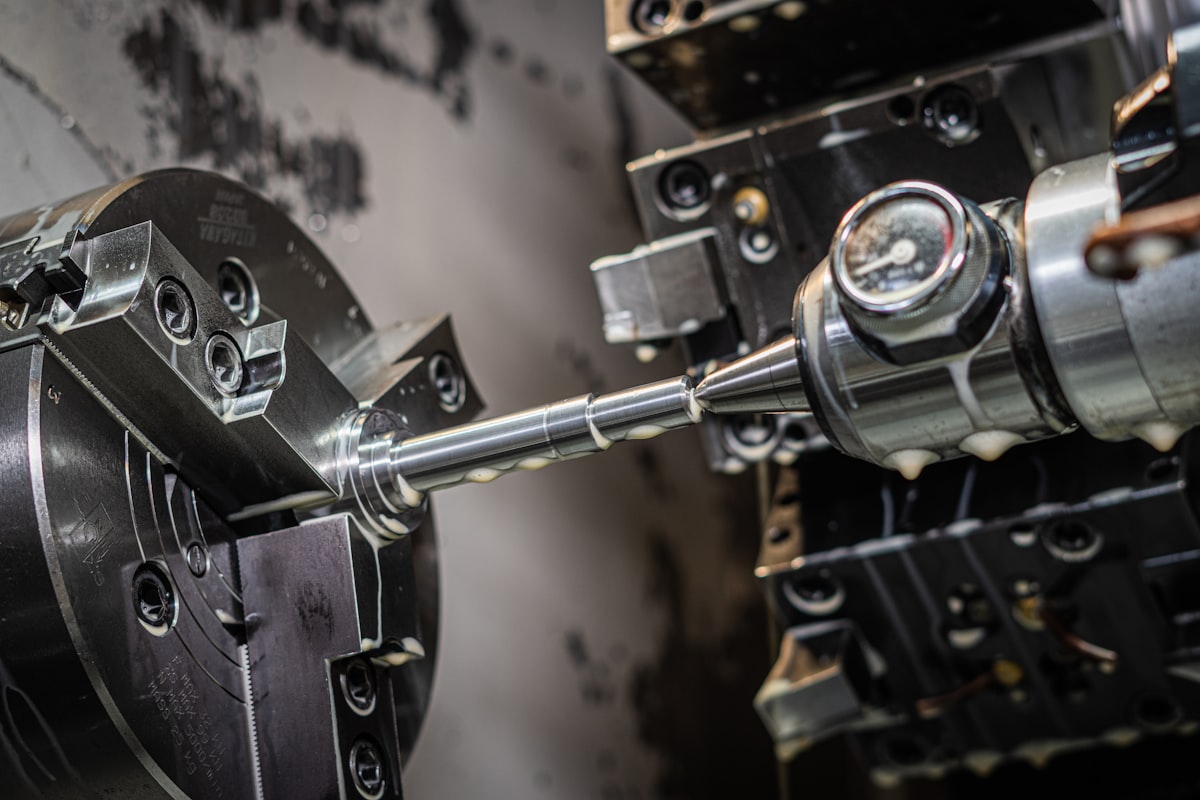
About six times slower. That ratio, together with the price of the bar, is most of what separates a titanium quote from an aluminium one.
Does this part really need titanium?
Titanium costs more as bar and takes longer on the machine, so it is worth being sure. Tick what applies to your part. Two or more ticks and titanium is usually the right call.
Parts that come to us in titanium
- Aerospace brackets and fittings
- Surgical instruments
- Implant components and trials
- Heat exchanger and valve parts
- Marine fasteners and shafts
- Motorsport uprights and hubs
- Sensor and antenna housings
- Knife, watch and pen parts
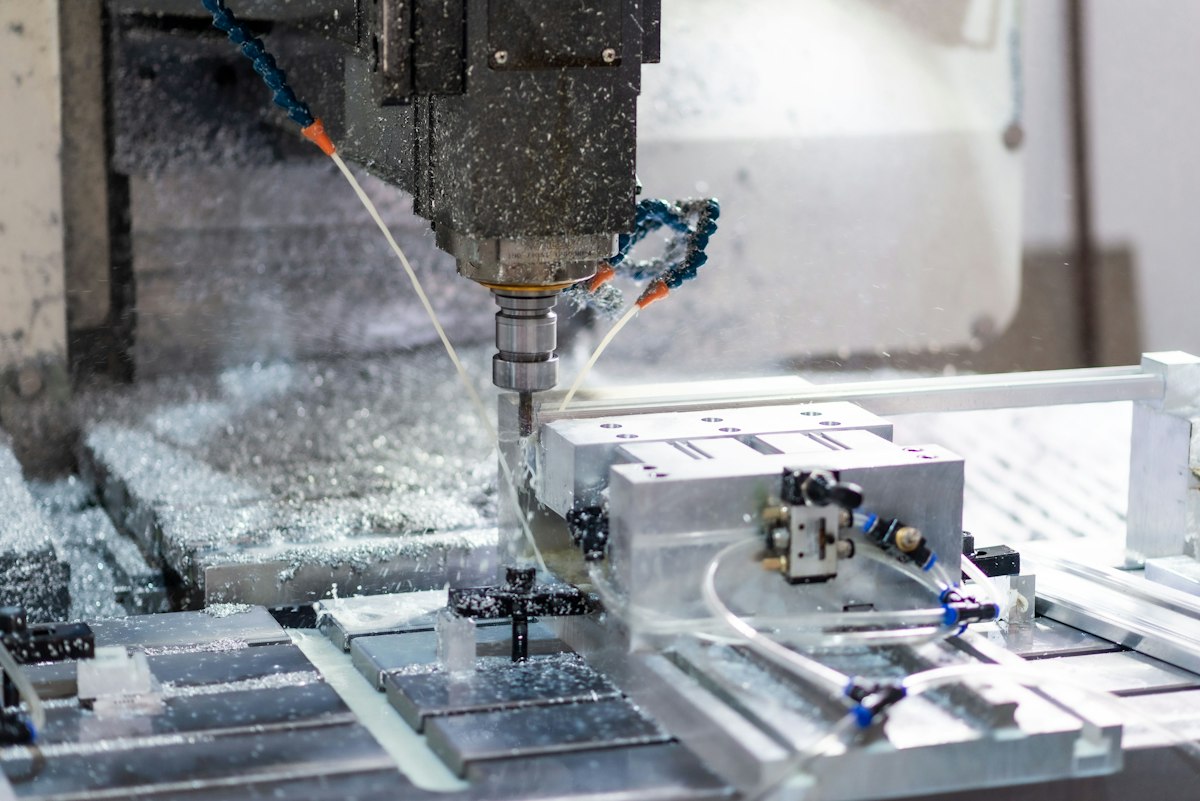
Titanium holds heat in the cutting zone instead of carrying it away in the chip. That is why shops run it slowly, flood it with coolant and change inserts more often than they would on steel.
Grade 2 or Grade 5?
Almost every titanium RFQ lands on one of these two. The choice changes the price as much as the geometry does, so it is worth settling before you send the drawing.
Grade 2, commercially pure
Corrosion first, strength second. Roughly the tensile strength of mild steel, with titanium's corrosion behaviour.
- Right for chemical, marine and heat exchanger parts
- Cuts faster and wears tools less than Grade 5
- Welds readily, and cheaper per kilo as bar
Grade 5, Ti-6Al-4V
The structural alloy. Close to twice the tensile strength of Grade 2, and most of what shops are asked to quote.
- Right for loaded parts: brackets, fittings, uprights, implants
- Cuts at around half the speed, so machine time goes up
- Heat treatable, and available as Grade 23 ELI for implants
Titanium grades and what to expect
What changes when you ask a shop to quote in each grade. These are typical ranges, not promises. The shop that quotes you confirms what it can hold on your geometry.
| Grade | Where it is used | How it machines | Typical tolerance |
|---|---|---|---|
| Grade 2 (CP) | Chemical plant, marine and heat exchanger parts, and some medical hardware. | The easiest titanium to cut. It is gummy rather than hard, so it wants sharp tools and a steady feed. | ±0.05 mm general, ±0.02 mm on fitted features |
| Grade 5 (Ti-6Al-4V) | The default structural titanium. Aerospace fittings, motorsport parts and consumer hardware. | Around half the surface speed of Grade 2 and harder on tools. Most titanium quotes are for this grade. | ±0.05 mm general, ±0.01 mm where the drawing justifies it |
| Grade 23 (ELI) | Extra low interstitial Ti-6Al-4V. Implants and parts that need fracture toughness. | Cuts like Grade 5. The real difference is the certificate and the lot traceability the shop has to hold. | ±0.05 mm general, ±0.01 mm where the drawing justifies it |
| Grade 9 (Ti-3Al-2.5V) | Tubing, hydraulic lines and bicycle frames. Strength sits between Grade 2 and Grade 5. | Easier than Grade 5 and harder than Grade 2. Often supplied as tube, so confirm the stock form early. | ±0.05 mm general |
| Grade 7 and Grade 12 | Palladium or nickel and molybdenum added for crevice corrosion in hot chloride. Chemical plant parts. | Machines much like Grade 2. Bar is expensive and lead time on stock can run longer than the machining. | ±0.05 mm general |
Not sure which grade the part needs? Describe the service conditions on the RFQ instead. Temperature, what it touches, what load it carries. A shop that cuts titanium every week will tell you which grade it would quote.
Industries we match titanium work for
Different industries bring different paperwork. Mention mill certificates, lot traceability or first article inspection in your RFQ so we match shops that already work that way.
Aerospace
Brackets, fittings and housings in Grade 5, usually with a mill certificate and a first article report.
Medical and dental
Instruments and implant parts in Grade 5 and Grade 23 ELI, with lot traceability.
Marine and offshore
Grade 2 fasteners, shafts and pump parts that sit in sea water for years.
Chemical processing
Grade 2, Grade 7 and Grade 12 valve and heat exchanger parts for hot chloride service.
Motorsport
Uprights, hubs and fasteners where a kilo saved is worth the extra machining time.
Consumer and EDC
Knife scales, watch cases, pens and bike parts in Grade 5. Small batches, and the finish matters.
How it works
One RFQ from you. A short list of shops that fit. No bidding platform and no middleman on the order.
Send your RFQ
Upload a STEP file or PDF drawing and tell us the grade, quantity, tolerance and when you need it. Takes about three minutes.
We match up to 3 shops
We read the drawing and pick shops whose machines, grades and part size fit. You hear from us within 24 business hours.
Shops quote you directly
Each shop contacts you with a quote. You compare, ask questions and place the order with the one you choose.
Why you can take the advice on this site
We are paid by shops, for matched requests. That is a reason to check our reasoning rather than take it on faith, so the method is published in full.
How we match
The five steps, the seven criteria a shop has to clear for your part, and the five things we will not promise you.
Editorial standards
Where every number comes from, why each one says typical, and what we refuse to publish. Including our own conflict of interest.
Who runs this
One person, no commission on your order, no placement for sale. And an honest list of what we cannot show you yet.
What drives the price of a titanium part
Six things decide most titanium quotes. If a price looks high, one of these is usually the reason, and two of them you can change on the drawing.
- Bar price and buy to flyTitanium bar costs several times what aluminium does, and a part cut from solid can leave most of that bar on the floor as chips. Near net stock or a forging moves the price more than any cycle time saving.
- Cutting speedTi-6Al-4V runs at a fraction of the surface speed of aluminium. The same geometry simply holds the machine longer.
- Tool wearTitanium is abrasive and keeps heat in the cutting zone. Shops change inserts more often and price that in.
- Rigidity and fixturingThin walls and long reaches chatter in titanium. Extra fixturing or a slower finishing pass shows up in the quote.
- Tolerance and finishEvery step tighter than you need adds a pass and an inspection. Only tolerance what has to be toleranced.
- Certificates and inspectionA mill certificate to EN 10204 3.1, heat lot traceability or a first article report all add handling. Ask for what you need and nothing more.
Have a drawing ready?
Send the short version now. We will ask for anything missing. If you would rather give full details up front, use the full RFQ form.
Your files go only to the shops we match. Ask for an NDA and nothing is shared until it is signed.
Cut titanium already? Get RFQs that fit your machines.
Shops see a preview of each request before paying for it and talk to the buyer directly. We take no commission on the order.
Questions buyers ask
Something else? Email .
Is this free for buyers?
Yes. You pay nothing to send an RFQ or to receive quotes. Shops pay us for matched requests. Price, terms and delivery are agreed between you and the shop.
Do you machine titanium yourselves?
No. We are a matching service, not a machine shop. The shops that quote you own the machines, and you place the order with them.
Which titanium grades can you get quoted?
Grade 2 and the other commercially pure grades, Grade 5 Ti-6Al-4V, Grade 23 ELI, Grade 9 Ti-3Al-2.5V and the corrosion grades 7 and 12. If you are not sure which grade the part needs, describe the service conditions instead and say so on the form.
Who sees my drawing?
Shops first see a short preview with part type, grade, size, quantity and tolerance. It does not include your name, company or files. Your contact details and files go only to the shops we match, up to 3. If you ask for an NDA, we hold the files until it is signed.
Can the shops supply mill certificates and lot traceability?
Many can, and it changes the price. Say on the RFQ whether you need a mill certificate to EN 10204 3.1, heat lot traceability or a first article inspection report, and we only match shops that already work that way.
Which file formats can I send?
STEP or IGES for the 3D model, plus a PDF drawing with tolerances, surface finish and any certificate notes. DWG and DXF also work. A STEP file together with a PDF drawing gets the most accurate quotes.
Guides for titanium buyers
Drilling Titanium: Why Holes Are the Hardest Feature
Why titanium sends more heat into the drill than any other operation, what that does to hole quality, and the drawing choices that make deep holes cheaper.
Titanium Welding and Alpha Case: What Buyers Should Know
Why titanium has to be welded under shielding gas, what alpha case actually is, and the questions to ask when a machined part is also a welded assembly.
Titanium Scrap Value: What Happens to Your Buy to Fly Waste
Titanium turnings are worth real money, so why doesn't the shop credit you for them? What happens to machining scrap and when it is worth asking about.