Guides / For Shops
Titanium Chip Fires: Shop Rules for Fines, Coolant and Chip Handling
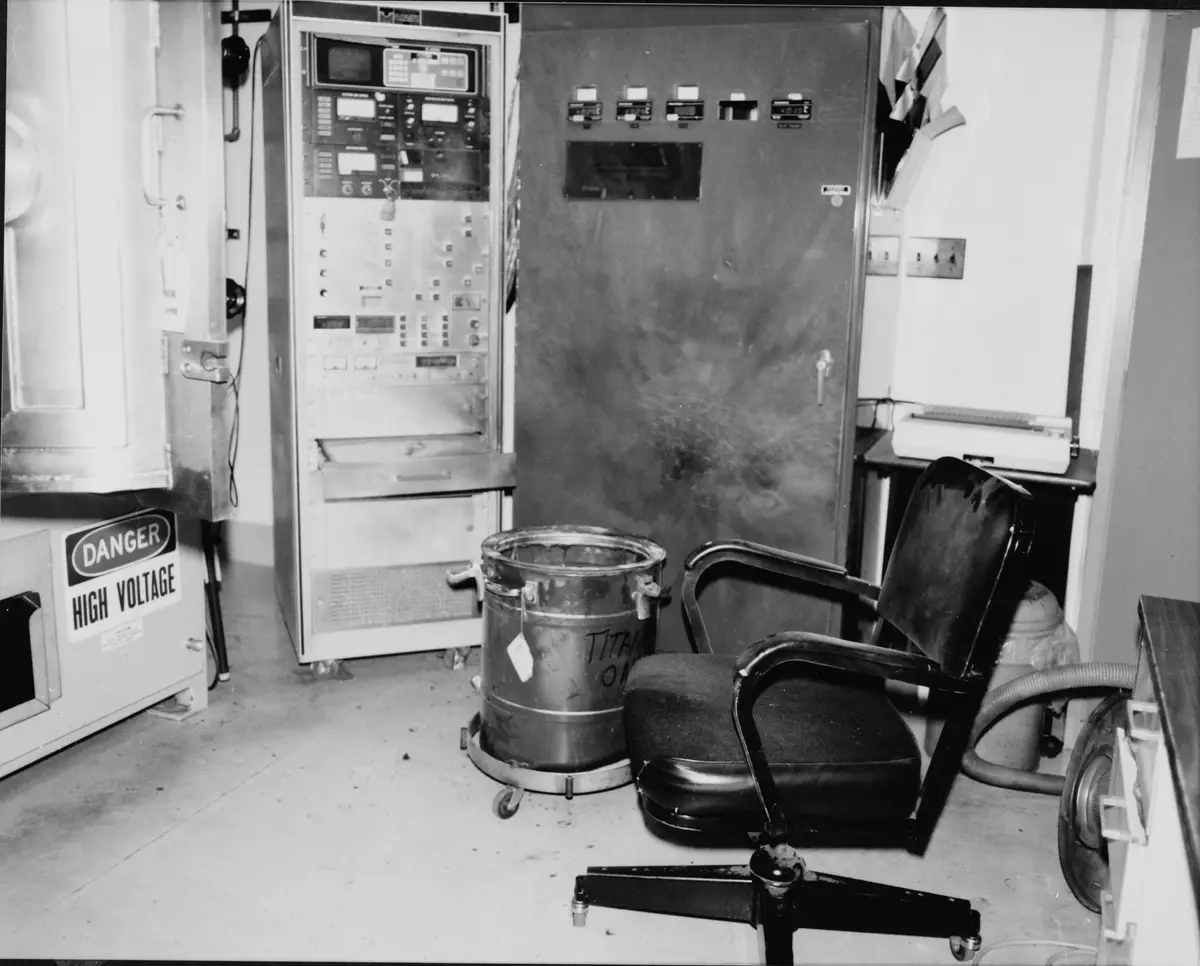
A titanium chip fire starts with fine, thin or dry material meeting heat, and the rules that follow are about keeping chips cool, keeping fines from piling up and knowing what not to put on a fire. We found no public statistics on how often titanium machining fires happen, so we give none. What public sources do support is below, with each rule marked by how strong its basis is. Read it with your own safety data sheets and your fire authority, because the sources disagree on some details and none of them replaces a fire protection engineer.
Why titanium burns when other metals do not
Titanium does not look flammable when it sits as bar. The hazard is surface area. A safety data sheet from ATI (revised July 2020) for titanium fines, saw fines, saw swarf and sponge classes the material as a Category 1 flammable solid. It says very fine, high-surface-area material from grinding, buffing or polishing may ignite spontaneously at room temperature, and that fine particles can form combustible dust and air mixtures.
A US Chemical Safety Board case study of the 2010 AL Solutions explosion in West Virginia, which killed three people, adds numbers from the facility’s own data sheet. It says titanium dust can be explosive if the particles pass a 100-mesh sieve, finer than 150 microns, and hang in the air at about 43 g per cubic metre or more. That plant recycled titanium and zirconium scrap, not machined parts, so treat it as a lesson about fines, not about chips from a lathe. The board also found the plant had no Class D extinguishers and told staff to let metal fires burn.
In machining, ignition needs a source. A 2018 University of Sheffield paper on finish turning Ti-6Al-4V says the ignition of dry titanium chips can cause a fire. A titanium machining service’s own web page adds detail: chips are the main ignition source, risk rises with chip temperature and with thin, stringy chips, and tools near the end of life run hotter. Its figures, such as chip temperatures above about 800 °C and cutting speeds above 80 m/min, carry no cited test data, so use them as prompts for your own review rather than as limits.
Shop rules and what supports them
| Rule | Why | Basis |
|---|---|---|
| Flood the cutting zone, with coverage ahead of pressure | The goal is to keep chips below ignition, not to put a fire out later | Vendor guidance; Sheffield paper shows coolant raises the allowable speed |
| Check nozzles every shift for blockage | One blocked nozzle can leave a gap that total flow will not show | Vendor guidance |
| Change tools at the first change in chip form | Worn tools heat the chip and tangle it | Vendor guidance; Sheffield paper reports tangled chips in both dry and flood cutting |
| Keep coolant concentration where the supplier says | Weak coolant raises friction and heat | Vendor guidance (8 to 10% in its example) |
| Clear chips at the end of each cycle or shift | Dry chips in corners are a fuel store | Vendor guidance; producer data sheet says prevent dust accumulation |
| Sweep with non-sparking tools into dry, closed containers | Avoid sparks and raised dust | Producer safety data sheet |
| Filter fines out of the sump and keep the sludge away from ignition | Fines settle in the coolant system, and titanium scrap propagated combustion in the board’s tests | Vendor guidance; US Chemical Safety Board |
| Keep water off burning metal | Steam and hydrogen can cause an explosion | Producer safety data sheet |
| Keep Class D agent within reach of the work | Smother a small fire with salt | Producer safety data sheet; US Chemical Safety Board |
| Write the metal fire plan down with your fire authority and train for it | Staff need to know in advance what to do; the plant in the board’s case had no Class D extinguishers and a let-burn instruction | US Chemical Safety Board |
Our tooling and coolant guide, the speeds and feeds guide and the turning and chip control guide cover the machine side of the first four rules.
Wet, dry or somewhere between
The Sheffield trial compared through-tool emulsion at 60 bar, flood coolant and dry cutting on Ti-6Al-4V and Ti-10V-2Fe-3Al. For the same 15-minute tool life, dry turning ran at about 70 to 80% of the through-tool cutting speed, flood at 88 to 92%. Dry cutting did well on tool wear and reduced resource use, but both dry and flood turning gave tangled chips, and the authors list the fire risk of dry chips as something to manage. So a dry strategy trades coolant cost for fire risk and slower cutting. Ask a fire protection engineer to review the plan before you choose it.
Deep drilled holes and pockets are where chips pack and coolant struggles to reach. Our drilling guide explains why holes are the hardest feature, and the vendor page names drilling and deep pockets as the places chips pack and coolant struggles to reach.
Need a quote for this part? Get a titanium quote
What to put on a fire
Sources disagree here, which is why this is a decision for your fire authority and not a blog post.
- The ATI data sheet says smother small fires with salt, isolate large fires and let them burn out, and do not spray water on burning metal because of the steam and hydrogen it forms.
- The Chemical Safety Board report quotes the AL Solutions data sheet as saying that large quantities of water can quench small titanium fires, but should not be used on large ones.
- The titanium machining service’s page lists CO2 or inert gas flooding as the common automatic suppression, with dry chemical possible but needing thorough cleaning afterwards.
Two data sheets differ on small fires and water, and one service’s suppression choice has not been checked against your machine. Take your own supplier’s current data sheet, the extinguisher type your fire authority accepts and your insurer’s view, and write them into one procedure.
Who sets the rules
In the United States, NFPA 484, Standard for Combustible Metals, is the consensus standard for this work. OSHA’s letter of 23 May 2016 says OSHA has no specific combustible dust standard and relies on its General Duty Clause. It also says OSHA does not interpret or enforce NFPA standards directly but may use them as evidence that a hazard is recognized, and it cites frequent cleaning as one way to keep metal dust accumulation low. Outside the United States, your fire code and insurer set the rules. We did not open the text of NFPA 484 for this guide, so read it, or have your fire protection engineer read it, before you rely on any requirement.
Where this fits a titanium quote
Safety costs money: coolant systems, cleaning time, extinguishers and training. Our guide to quoting titanium work lists tooling and fixturing as costs that shops bury in overhead, and fire control belongs in that list too. A buyer who audits a shop will ask how it handles chips, so having a written answer helps.
If your shop already cuts titanium and wants work requests that fit its machines, join as a partner shop. There is no fee to join, and you decide what to quote.
Sources
- ATI, safety data sheet SAC020, Titanium Fines, Saw Fines, Saw Swarf and Sponge (revision 1 July 2020)
- US Chemical Safety Board, AL Solutions Metal Dust Explosion and Fire, case study 2011-3-I-WV, July 2014
- OSHA, standard interpretation of 23 May 2016 on NFPA 484 and combustible metal dust
- Taylor, Hernandez, Marshall and Broderick, Cutting fluid application for titanium alloys Ti-6Al-4V and Ti-10V-2Fe-3Al in a finish turning process, Procedia CIRP 77, 2018 (University of Sheffield)
- Boze Titanium Manufacturing Center, titanium chip control and fire prevention (vendor page, figures directional)
Frequently asked questions
Can titanium chips catch fire in a machine shop?
Yes. A 2018 University of Sheffield paper on finish turning states that the ignition of dry titanium chips can cause a fire. Risk rises with fine, thin material, which has a large surface for its weight. A producer's safety data sheet says very fine material from grinding or buffing can ignite spontaneously at room temperature.
What extinguisher do you use on a titanium fire?
A producer's safety data sheet says to smother small fires with salt and to isolate large fires and let them burn out, and a US Chemical Safety Board report notes that Class D sodium chloride extinguishers are intended for titanium. The same data sheet says not to spray water on burning metal. Check your own supplier's data sheet and your fire authority.
Is it safer to cut titanium wet or dry?
Flooding the cut keeps chips cool, and in a Sheffield trial dry turning reached about 70 to 80% of the through-tool-coolant cutting speed for the same 15-minute tool life, with flood at 88 to 92%. Dry cutting works, but the paper names chip ignition as a risk to manage. Ask a fire protection engineer before running dry.
How should titanium chips and fines be stored?
Sweep them with non-sparking tools into dry, closed containers, keep them away from heat, sparks and static, and avoid raising dust, as one producer's data sheet advises. Empty bins on a fixed schedule and label them. The producer stores its own fines sealed in argon-filled steel drums, so ask your fire authority what it expects for chips.
Need a quote for this part?
Send the drawing. We send one itemised quote for the finished parts and reply within 24 business hours.
Get a titanium quote