Guides / Grades
Machining Beta Titanium Alloys: What Changes From Ti-6Al-4V
A drawing calls for Ti-5553 or Beta C, and the RFQ asks for a price as if it were Ti-6Al-4V with a different name. It is a different material. Beta titanium alloys are chosen for strength that Grade 5 cannot reach, and they carry that strength into the cutting zone. A shop that quotes them at Ti-6Al-4V rates either loses money or delivers late.
This guide explains what beta alloys are, which ones turn up on RFQs and how the machining sequence changes the quote.
What makes an alloy beta
Titanium has two crystal structures. Alpha is stable at room temperature and beta takes over at high temperature. Alloying elements decide which one survives when the metal cools.
Beta stabilisers such as molybdenum, vanadium and chromium hold the beta structure at room temperature. An alloy with enough of them is called a beta alloy. Ageing then precipitates fine alpha particles inside the beta matrix, and that is where the strength comes from.
Two properties follow that buyers should know.
- Deep hardening. Beta alloys respond to heat treatment through thick sections, where Ti-6Al-4V only hardens through a thin one. That is why they appear in large forged parts such as landing gear.
- High strength to weight. Aged beta alloys can reach strength levels well above heat treated Ti-6Al-4V, with a density a little higher.
Alloys you will see on drawings
| Alloy | Nominal composition | Typical form | Typical use |
|---|---|---|---|
| Ti-5553 | Ti, 5% Al, 5% Mo, 5% V, 3% Cr | Forgings and bar | Landing gear and heavy structure |
| Beta C | Ti, 3% Al, 8% V, 6% Cr, 4% Mo, 4% Zr | Bar, wire and strip | Springs, fasteners, oil and gas parts |
| Ti-10V-2Fe-3Al | Ti, 10% V, 2% Fe, 3% Al | Forgings | Airframe forgings, landing gear |
| Ti-15V-3Cr-3Al-3Sn | Ti, 15% V, 3% Cr, 3% Al, 3% Sn | Sheet and strip | Formed sheet parts |
Beta C is also listed by ASTM as Grade 19. Ti-5553 has no ASTM grade number, so it is called out by an aerospace material specification or a customer specification. Check which document your drawing names, because the certificate follows it.
How strength changes the cutting
Two numbers drive most of the difference. Typical figures for common conditions look like this.
| Condition | Typical tensile | Typical hardness | Cutting behaviour |
|---|---|---|---|
| Ti-6Al-4V annealed | around 900 to 1,000 MPa | around 32 HRC | The baseline |
| Beta alloy, solution treated | around 800 to 1,000 MPa | softer than aged | Close to Ti-6Al-4V |
| Beta alloy, aged | around 1,100 to 1,250 MPa | around 38 to 42 HRC | Slower surface speed, faster tool wear |
Treat these as ranges. Alloy, heat treatment and forging all move them, and a shop will confirm what it measures.
In the aged condition, shops typically run surface speeds below those used on Ti-6Al-4V, and insert life shortens. The same trade-offs described in titanium speeds and feeds apply, only with less room for error. The tooling and coolant guide explains why high pressure coolant at the edge matters more as strength goes up.
The machining sequence is part of the quote
The biggest decision is not the cutting speed. It is when the part gets aged.
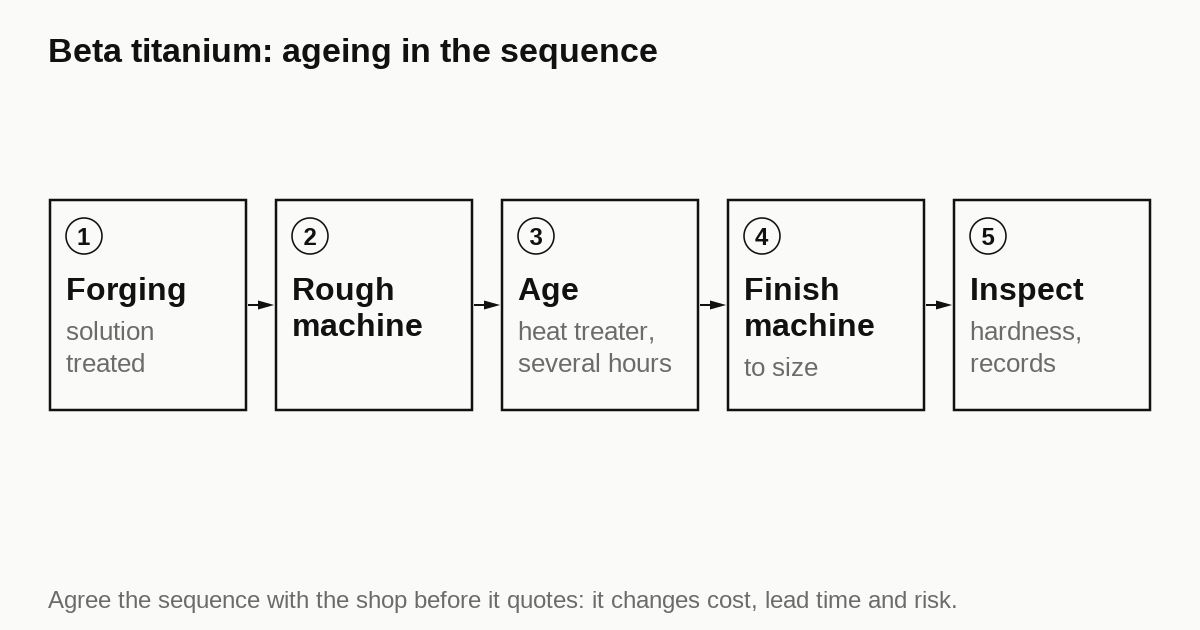
Machine soft, age, finish. The usual route for a part that needs final strength. The shop removes most of the stock in the solution treated condition, sends the part out for ageing, then finish machines to size. Rough stock removal is cheaper because the metal is softer. The finishing pass handles any movement from ageing.
Machine aged from the start. Simpler logistics and no distortion step, but every cut is in the hard condition. Better for small parts or light stock removal.
Age after finish. Only where the geometry tolerates a size change, because ageing at temperature can move thin or complex parts. Allow for it in the drawing tolerances and ask the heat treater what to expect.
The sequence changes cost, lead time and who needs which approval. Agree it with the shop before it quotes, and see the solution treated and aged guide for how the same logic works on Ti-6Al-4V.
Stock form and forging quality
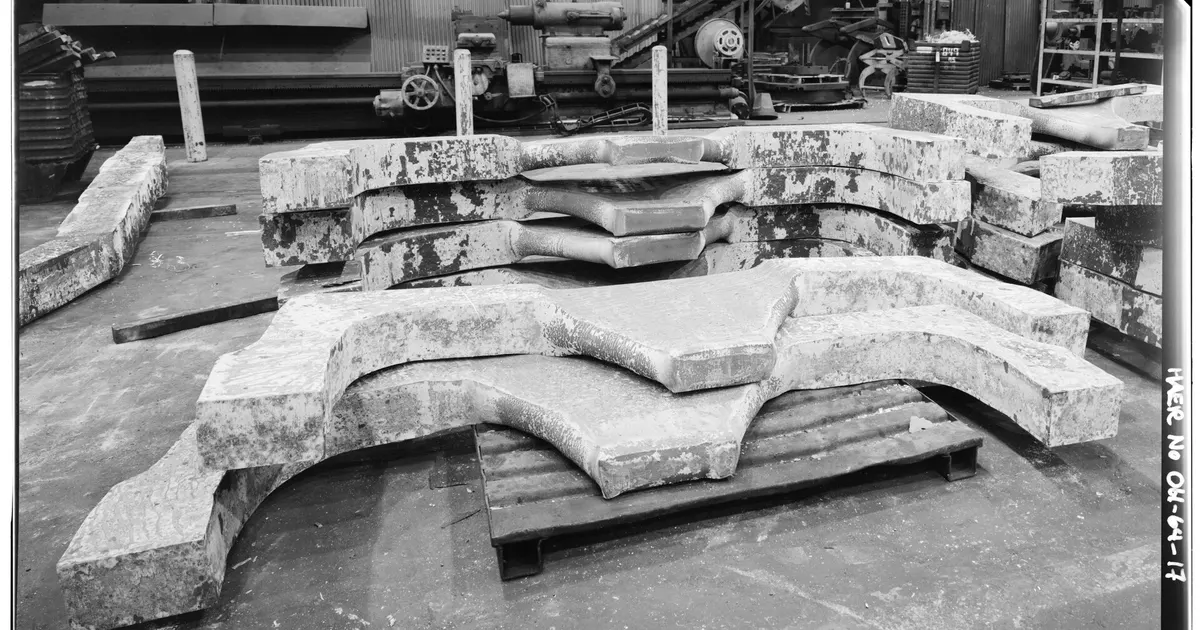
Beta alloys more often arrive as forgings than as plain bar. That brings three questions that do not come up on Grade 5 bar.
- Who forged it and to what specification? Aerospace work usually names the forging specification and approved sources.
- Is the microstructure controlled? Beta alloys can show a defect called beta flecks, which are small regions that differ in composition. Forging and melting control it, so check what inspection the specification requires.
- Is it supplied in the condition you need? Solution treated, aged or annealed. Make sure the certificate states it.
Lead time for these forgings is measured in months more often than weeks. The stock forms and lead time guide shows how to split stock time from machining time.
Need a quote for this part? Get a titanium quote
Risks specific to beta alloys
- Heat treatment spread. Aged strength depends on time and temperature. Ask whether the heat treater works to your specification and gives you the furnace record.
- Alpha case. Any high temperature step in air grows an oxygen rich surface layer that must be removed. See titanium welding and alpha case.
- Galling and smearing. Beta alloys can gall on threads and sliding faces, so thread forming and thread milling need a plan.
- Tool wear drift. Wear that is slow on the first parts accelerates, so the shop should plan insert changes by count instead of by inspection.
Fixturing and thread work
Strong material pushes harder on the fixture. Forged beta parts are often large and awkward, and cutting forces rise as the aged condition gets harder. Shops typically plan three things.
- Rigid workholding. Chatter shows up quickly and damages inserts, so the fixture has to resist the cutting force at the point of the cut, not just hold the part.
- Datum strategy. A forging has no square reference faces. Agree datums early and note any stock allowance on the drawing.
- Threads. Threads in a high strength beta alloy are harder to cut and can gall. Thread milling gives better control than tapping, and the drawing should state the thread class and any coating or lubricant requirement.
If the drawing specifies surface finish on a bearing or fatigue critical area, tell the shop. Finishing in the hard condition and finishing in the soft condition leave different surfaces, and the heat treatment can alter them again.
Quote risk and a trial cut
No shop can price an alloy it has never cut with the same confidence as one it cuts every week. For a first order in a beta alloy, a sensible approach is a first article under agreed conditions: one part, full inspection, tool wear recorded. That gives both sides real data before the production quantity is committed.
Ask the shop for the tool life it expects per insert and per drill, and for how it will adjust if wear runs faster than planned. A quote that shows nothing but a flat hourly figure hides the assumption you want to see. The cost guide explains how tool wear enters the total.
What to put on the RFQ
- Alloy and designation: for example Ti-5553 or Beta C Grade 19, with the specification that governs it.
- Delivery condition: solution treated, annealed or aged.
- Final condition: the strength or hardness the finished part must have, and the heat treatment specification.
- Sequence: whether you expect machining before or after ageing, or whether the shop should propose it.
- Stock form: forging, bar or billet, and whether you supply it.
- Inspection: ultrasonic, penetrant or microstructure checks, with the standard for each.
- Certificates: mill certificate and heat treatment record. The mill certificates guide explains what each document covers.
Send the drawing and those points through the RFQ form and shops that cut beta alloys will reply within 24 business hours. If you are still choosing between alloys, the grade reference shows how the common grades compare.
If you are choosing between alpha-beta and beta alloys, start with our guide to titanium grade selection.
Frequently asked questions
What is a beta titanium alloy?
A titanium alloy with enough beta stabilising elements, such as molybdenum, vanadium and chromium, that the beta phase stays after cooling from heat treatment. Ti-5553 and Beta C are common examples. Both reach high strength after solution treating and ageing.
Is beta titanium harder to machine than Ti-6Al-4V?
In the aged, high strength condition, typically yes. Shops run lower surface speeds and see faster tool wear. In the solution treated condition the metal is softer and cuts closer to Ti-6Al-4V.
Should a beta alloy part be aged before or after machining?
It depends on the part. Many shops rough machine in the softer condition, age, then finish machine to hold size. Ageing can move thin or complex parts, so the sequence is worth agreeing with the shop before it quotes.
Need a quote for this part?
Send the drawing. We send one itemised quote for the finished parts and reply within 24 business hours.
Get a titanium quote